210 credits · $2.10 per video · Failed jobs return your credits
What Is East Coast Rap?
East Coast rap is a regional hip-hop tradition rooted in New York City and connected to scenes in New Jersey, Philadelphia, Boston, and beyond. Its classic sample-driven recordings often favor detailed verses, internal rhyme, and hard kick-and-snare patterns over a hook-first arrangement. Around 90 BPM is a useful boom bap starting point, not a definition of every East Coast record. Jazz rap, storytelling, commercial crossover, and NY drill all complicate the idea of one fixed sound.
Where East Coast Rap Comes From: Brooklyn, the Bronx, Queens and New Jersey
The Bronx’s neighborhood parties are central to hip-hop’s early history, but the recorded tradition grew through exchanges across boroughs and neighboring cities. Brooklyn and Queens developed distinctive crews and voices; New Jersey contributed party records, lyricists, and industry connections. Philadelphia and Boston have their own histories rather than simply extending a New York template. Geography explains community and infrastructure, while a producer’s drum choices and an MC’s phrasing explain the sound of an individual track.
The East Coast Rap Timeline: 1979 to Today
Four listening eras; dates are guide boundaries
Era
Records and milestones
Labels / scenes
1979–1987: Old School Beginnings
Rapper’s Delight (1979); The Message (1982)
Sugar Hill; Def Jam (founded 1984)
The Golden Age of Hip Hop: 1988–1996
The Low End Theory (1991); Illmatic (1994)
Jive; Loud; Columbia
1997–2009: Shiny Suit Era to Blog Era
Life After Death (1997); The Blueprint (2001)
Bad Boy; Roc-A-Fella
2010–Today: Drill, Griselda and the Underground
Brooklyn drill’s mainstream breakthrough (2019)
Griselda; independent and major-label scenes
1979–1987: Old School Beginnings
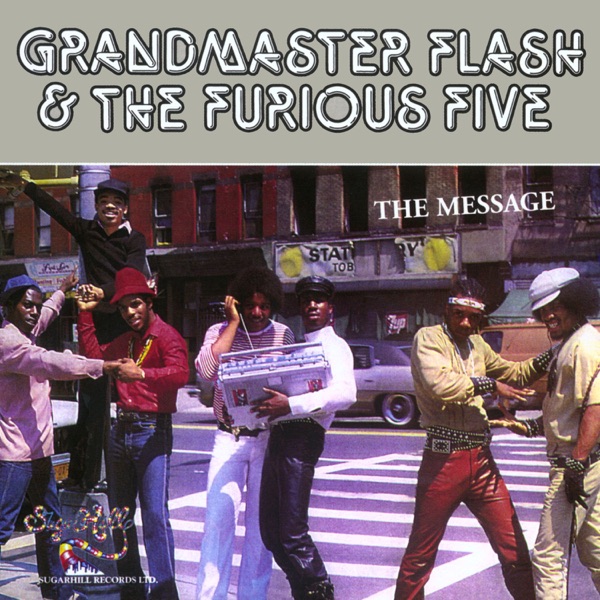
New York’s DJ and MC culture predates the first commercially successful rap singles. The 1979 breakthrough of Rapper’s Delight brought recorded rap to a wider audience; The Message followed in 1982 with vivid social observation. Drum machines, scratching, and harder vocal delivery expanded the palette. Def Jam, founded in 1984, became an important institutional home for the developing music. These years connect block-party performance with a record industry rather than marking one overnight invention.
The Golden Age of Hip Hop: 1988–1996
This guide uses 1988–1996 as a focused listening window, rather than a universally agreed historical boundary. De La Soul’s 1989 debut, A Tribe Called Quest’s The Low End Theory in 1991, Wu-Tang Clan’s Enter the Wu-Tang (36 Chambers) in 1993, and Nas’s Illmatic in 1994 show how different sample-based rap could sound. Playful ensembles, abrasive crews, and precise solo storytelling all belonged to the same regional conversation. Independent production identities mattered as much as geography.
Commercial polish and underground independence developed alongside each other. Bad Boy’s glossy crossover sound did not replace raw sample-based rap; it shared the period with different club, street, and independent approaches. By the later 2000s, online discovery gave listeners additional routes beyond radio and record-store distribution. Treat this era as a set of parallel scenes, not a claim that every East Coast rapper adopted the same shiny-suit aesthetic or that lyrical rap stopped when Southern records became more prominent.
Brooklyn drill brought sliding bass, tense percussion, and a different rhythmic feel into New York rap, drawing on drill’s transatlantic development. The library marks its mainstream breakthrough in 2019. At the same time, Griselda and other independent artists kept sparse, gritty sample-based production visible. These approaches coexist: a modern East Coast record can be a fast-written drill track, a slow loop with minimal drums, or something outside either template. A regional identity does not freeze the music at its 1990s sound.
East Coast Rap Subgenres: Boom Bap, Jazz Rap, Storytelling and NY Drill
Boom Bap
Boom bap is organized around the impact of the kick and snare. A sampled break, clipped bass phrase, and short soul or jazz loop can supply a whole arrangement, with small changes creating momentum. The default preset starts at 90 BPM, a practical center for a head-nodding verse. A rapper can sit slightly behind the pulse or land sharply on it without changing the beat. This is a production approach used well beyond New York; the East Coast connection comes from the depth of its classic recorded tradition.
Jazz rap foregrounds harmonic color and a relaxed conversational pocket. Upright-style bass, warm keyboard voicings, and horn textures can soften the surface while the writing remains detailed. The 84 BPM preset leaves space for a voice to move around the drums rather than race them. A jazz source does not automatically make a record jazz rap: the relationship between loop, ensemble feel, and delivery matters. Use this option for reflective topics, friendly storytelling, or verses that need a warmer setting than the harder boom bap default.
Storytelling rap is a writing and delivery approach rather than a single set of instruments. A clear narrator, specific setting, and change in circumstances give the listener something to follow. The 88 BPM preset uses a measured pocket so details can stay intelligible. Give your topic a beginning, a decision, and a consequence; then let the beat support the account. A hook can summarize the emotional stakes without repeating every event. This direction also works for an invented character or a personal milestone, with original language and no borrowed famous lines.
NY drill shifts away from the classic sampled-break template toward sliding 808 bass, syncopated percussion, and a tense, often clipped delivery. The 144 BPM preset is a written tempo: the perceived pulse can be slower because listeners hear a half-time framework. That distinction prevents a misleading comparison with 90 BPM boom bap. The sound reflects connections between New York and other drill scenes rather than an isolated invention. Choose this direction for urgent rhythmic energy; the subject can still be playful, personal, or celebratory instead of violent.
Start around 85–95 BPM with a kick that anchors the low end and a snare that clearly marks the backbeat, commonly on beats two and four. A chopped break may already contain its own timing, so quantizing every hit can remove the pocket. MPC-style swing can shift subdivisions, while the SP-1200’s 12-bit sampling is associated with a grainier texture. Those are production references, not equipment requirements: modern tools can build an original groove without recreating any particular record.
Soul, jazz, and funk provide common sampling vocabularies: a horn stab, bass fragment, or short chord phrase can become the center of a loop. Leave space for consonants in the voice, and vary the arrangement at a hook or the end of a verse. The preset describes timbre and cadence; it does not supply licensed samples from the records listed below.
East Coast vs West Coast Rap: The Real Differences
Classic tendencies, with many exceptions
Dimension
East Coast
West Coast
Drums
Sampled breaks, punchy kick and snare
Funk-influenced grooves, programmed drums
BPM
Classic boom bap often 85–95
G-funk often overlaps a relaxed midtempo range
Delivery
Dense internal rhyme and sharp articulation
Relaxed pockets, melodic or conversational phrasing
Themes
City detail, competition, social observation
Local life, cruising, parties, social observation
Artists
Nas, Wu-Tang Clan, A Tribe Called Quest
Dr. Dre, Snoop Dogg, Ice Cube
Era
Golden-age sample craft; later drill and underground
1990s G-funk; later regional dance and rap scenes
The 1990s rivalry involved artists, labels, media coverage, and personal conflicts; it should not be treated as proof that two entire regions were enemies. Shared influences and collaborations run throughout the history. These columns describe recognizable tendencies rather than rules for classifying every rapper or reducing real violence to entertainment.
10 Essential East Coast Rap Songs to Know
A chronological listening route through early recordings, jazz rap, and classic boom bap. Years refer to the historical songs; Apple previews may be remasters or alternate catalog editions. Some recordings contain explicit language.
Rapper's Delight — The Sugarhill Gang (1979)
An early commercial breakthrough connects party MC delivery to a danceable bass groove.
A multisyllabic rhyme connects a sequence of sounds rather than only the last word. Internal rhyme adds echoes within a bar, letting a verse carry momentum before the line ending arrives. Neither requires cramming every beat with words: a pause can make the next rhyme land harder. For a short narrative, establish a setting, introduce a choice, and show what changes. Concrete details work better than a list of borrowed slang.
New York speech can supply vocabulary and accent, but there is no single compulsory East Coast voice. Compared with some Southern hook-led tracks, classic boom bap may put more information inside the verse; Southern rap also has intricate lyricists, and East Coast rap has memorable hooks. Use that contrast as a listening question, not a ranking of regions.
How to Make an East Coast Rap Video
This page uses the same AI rap video generator as the main tool, with an East Coast musical direction selected. Era and sub-style shape the prompt; they do not change the generation API.
Upload a photo.
Use a clear face and an image you have permission to animate.
Review the live quote and consent, then start. The default costs 210 credits ($2.10); one credit is $0.01. The existing generator updates the price when video settings change. Generation time varies.
Download.
When the job finishes, preview the result and download your video. Failed jobs return their credits.
Many classic sample-based tracks sit around 80–95 BPM, with boom bap often described around 85–95 BPM. Storytelling can work near 82–88 BPM, while NY drill may be written around 140–144 BPM with a half-time feel. Our default is 90 BPM. These are useful conventions, not limits on the whole region.
Is boom bap the same as East Coast rap?
Boom bap describes a drum-and-sample approach that can be made anywhere. East Coast rap describes a regional musical and industry history. Their overlap is substantial because many influential boom bap records came from the East Coast, but jazz rap, commercial crossover, and NY drill also belong to that wider history.
When did East Coast rap start?
Its roots lie in New York neighborhood DJ and MC culture during the 1970s. Recorded rap reached a commercial breakthrough in 1979. The late 1980s through the mid-1990s are often called a golden age, while drill and independent scenes carried the regional story into the 2010s and beyond.
Who are the biggest East Coast rappers?
There is no single ranking. For early foundations, Kurtis Blow’s The Breaks shows party rap, Run-DMC’s Raising Hell captures a harder crossover sound, and Rakim’s work on Paid in Full illustrates complex phrasing. For the 1990s, Nas’s Illmatic emphasizes street detail, The Notorious B.I.G.’s Ready to Die combines narrative and character, and Jay-Z’s Reasonable Doubt foregrounds intricate writing. For later generations, Joey Bada$$’s 1999 revisits sample-based rap, Pop Smoke’s Meet the Woo represents Brooklyn drill, and Westside Gunn’s Flygod connects to the Buffalo underground.
How do I make an East Coast rap video?
Upload a photo you have permission to use, choose an era and sub-style, add a topic or your own lyrics, generate, then download. The default video costs 210 credits ($2.10); changing video settings changes the quote shown under the button. The current site does not offer free sign-up credits. Musical direction is guidance, and output can vary.
 GoatRap